1964 Friday 7th February
-
-
- UK EP Release – ‘All My Loving‘
-
-
-
-
-
- A Side 1 – ‘All My Loving‘
-
-
-
-
-
-
-
- A Side 2 – ‘Ask Me Why‘
-
-
-
-
-
-
-
- B Side 1 – ‘Money (That’s What I Want)’
-
-
-
-
-
-
-
- B Side 2 – ‘PS I Love You‘
-
-
-
.
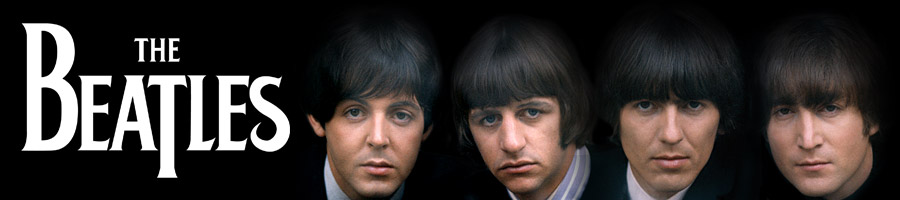
The Beatles’ American Invasion Begins
-
- The Beatles, along with manager Brian Epstein, road manager Neil Aspinall, and assistant Mal Evans, board Pan Am flight 101 (a Boeing 707), which departs from London Heathrow Airport early this morning bound for John F Kennedy International Airport (JFK), Jamaica, Queens, New York, NY 11430, USA. Landing at 1:20 p.m, to an unprecedented and chaotic welcome: approximately 5,000 screaming fans, mostly teenage girls, pack the upper balcony of the arrivals building, waving placards and banners, while around 200 reporters, photographers, and cameramen from radio, television, and print media jostle for position, marking the explosive start of Beatlemania in the USA
-
- BBC Radio – ‘Saturday Club‘ presenter Brian Matthew records a telephone interview the with The Beatles in their Presidential Suites on the 12th floor (specifically rooms 1209 through 1216), The Plaza Hotel, 768 Fifth Avenue, New York, NY 10019, USA. They were overlooking West 58th Street, where large crowds of fans had gathered outside
As Beatlemania swept across the UK in early 1964, The Beatles—John Lennon, Paul McCartney, George Harrison, and Ringo Starr—were on the cusp of their groundbreaking American invasion. On February 6, 1964, the day before their historic flight to the United States, the band was immersed in final preparations. George Harrison was photographed packing his bags with his parents, Harry and Louise, in Liverpool, capturing a personal moment amid the mounting excitement. Tickets for their upcoming appearance on The Ed Sullivan Show sold out, signaling the frenzy that awaited them across the Atlantic. While no performances or releases marked this exact date, the anticipation built toward their Pan Am flight the next morning, which would ignite Beatlemania in America. Reflecting on this in 2026, fans honor the prelude to their U.S. triumph through documentaries, remastered tracks, and social media discussions, underscoring how these quiet preparations led to a cultural revolution.
Amid the buzz surrounding The Beatles’ impending journey, the music charts of February 6, 1964, showcased a vibrant mix of British Invasion precursors and enduring pop hits.
Top 10 Songs in the UK Charts on February 6, 1964
- Needles And Pins – The Searchers (Position 1) Needles And Pins
- Hippy Hippy Shake – Swinging Blue Jeans (Position 2) Hippy Hippy Shake
- Glad All Over – Dave Clark Five (Position 3) Glad All Over
- I Want To Hold Your Hand – The Beatles (Position 4) I Want To Hold Your Hand
- Twenty Four Hours From Tulsa – Gene Pitney (Position 5) Twenty Four Hours From Tulsa
- As Usual – Brenda Lee (Position 6) As Usual
- I’m The One – Gerry & The Pacemakers (Position 7) I’m The One
- 5-4-3-2-1 – Manfred Mann (Position 8) 5-4-3-2-1
- Swinging On A Star – Big Dee Irwin (Position 9) Swinging On A Star
- Candy Man – Brian Poole & The Tremeloes (Position 10) Candy Man
In the United States, the charts were poised for The Beatles’ arrival, featuring a blend of surf rock, pop, and R&B that would soon be overshadowed by the British sound.
Top 10 Songs in the USA Charts on February 6, 1964
- I Want To Hold Your Hand – The Beatles (Position 1) I Want To Hold Your Hand
- You Don’t Own Me – Lesley Gore (Position 2) You Don’t Own Me
- Out of Limits – The Marketts (Position 3) Out of Limits
- Hey Little Cobra – The Rip Chords (Position 4) Hey Little Cobra
- Um Um Um Um Um Um – Major Lance (Position 5) Um Um Um Um Um Um
- Surfin’ Bird – The Trashmen (Position 6) Surfin’ Bird
- Anyone Who Had A Heart – Dionne Warwick (Position 7) Anyone Who Had A Heart
- Louie Louie – The Kingsmen (Position 8) Louie Louie
- There! I’ve Said It Again – Bobby Vinton (Position 9) There! I’ve Said It Again
- Forget Him – Bobby Rydell (Position 10) Forget Him
These chart-toppers provided a rhythmic backdrop to a day filled with international diplomacy and domestic trials, as headlines reflected global shifts and local challenges.
Top News Headlines in the UK and the World on February 6, 1964
In the UK, the government announced an accord with France to build the Channel Tunnel, a monumental engineering project linking Dover and Sangatte, symbolizing post-war European cooperation. Domestically, discussions on infrastructure and economic ties dominated. Globally, Cuba severed the water supply to the U.S. Guantanamo Bay Naval Base in retaliation for the seizure of Cuban fishing vessels, heightening Cold War tensions. In the U.S., the trial of Byron De La Beckwith for the murder of civil rights leader Medgar Evers began, spotlighting racial injustice. Meanwhile, WCIU-TV in Chicago commenced broadcasting, expanding media access.
As the world navigated these developments, February 6, 1964, also marked the entrance and exit of notable individuals, enriching the day’s historical fabric.
Notable Births on February 6, 1964
- Gordon Downie, Canadian rock singer-songwriter and musician (The Tragically Hip), known for his poetic lyrics and cultural impact in Canadian music.
- Andrey Zvyagintsev, Russian film director and screenwriter (The Return, Leviathan), acclaimed for his award-winning explorations of social issues.
- Petras Geniušas, Lithuanian classical pianist and educator, recognized for his interpretations and contributions to music education.
- Skip Ewing, American country vocalist (Coast of Colorado), noted for his chart-topping hits in the genre.
Notable Deaths on February 6, 1964
- Emilio Aguinaldo, Filipino revolutionary and first President of the Philippines, aged 94, pivotal in the fight for independence from Spain and the U.S., shaping modern Philippine history.
- Sophocles Venizelos, Greek politician and three-time Prime Minister, aged 69, influential in post-war Greek politics and son of Eleftherios Venizelos.
- W L “Tich” Cornford, English cricketer and wicketkeeper (4 Tests for England), aged 63, remembered for his contributions to Sussex County Cricket Club.
Complementing these personal stories, cultural milestones on February 6, 1964, highlighted innovation in infrastructure and media, influencing societal connectivity.
Cultural Events Shaping Global Culture on February 6, 1964
The Anglo-French agreement to construct the Channel Tunnel represented a landmark in engineering and international relations, promising to revolutionize travel between Britain and continental Europe. This project, envisioned as a 33-mile underwater rail link, sparked discussions on unity and progress in a divided Cold War world. In broadcasting, WCIU-TV (channel 26) in Chicago began operations as an independent station, expanding television access and paving the way for diverse programming. On stage, the musical “Rugantino” premiered at New York’s Mark Hellinger Theater for a 28-performance run, a commedia dell’arte-inspired tale of romance and adventure in 19th-century Rome, directed by Garinei and Giovannini, starring Nino Manfredi and Ornella Vanoni, blending Italian folklore with Broadway flair and influencing cross-cultural theater exchanges. No major films released on this date, but the era’s cinematic landscape, with upcoming hits like “Dr. Strangelove” (January 29), fueled satire and commentary on nuclear anxieties, shaping global dialogues on peace and absurdity.
In retrospect, February 6, 1964, stands as a threshold moment for The Beatles, whose preparations that day heralded a seismic shift in music and culture. Their legacy thrives in 2026 through immersive experiences, AI collaborations, and tributes like virtual reality recreations of their early journeys. The charts’ energy mirrors the excitement, while headlines evoke an era of innovation and tension. Births signal future artistic contributions, deaths close chapters of leadership, and cultural strides like the Tunnel agreement remind us of enduring human ambition. For enthusiasts, this date invites reflection on how quiet anticipations birthed extraordinary legacies.
.